2025 CPA Fall Symposium: Navigating Complexity: Recognizing and Treating OCD in the Context of Comorbid Disorders

Continuing Education Credits: 6 CEUs anticipated
Date & Time: Friday, November 7 | 8:30 AM – 5:30 PM
Location: In-Person or Hybrid Format
Assistance League of Denver
6265 E. Evans Ave, Suite 15
Denver, CO 80222
Event Sponsor – $1,000
- Exhibit table (2 staff)
- Pre-event email to all attendees
- Logo on website & event signage
- Recognition from the podium
Lunch Sponsor – $500
- Exhibit table (2 staff)
- Logo on website & signage
- Podium recognition
|
Rituals and Remedies: A Deep Dive into OCD Assessment and Medication
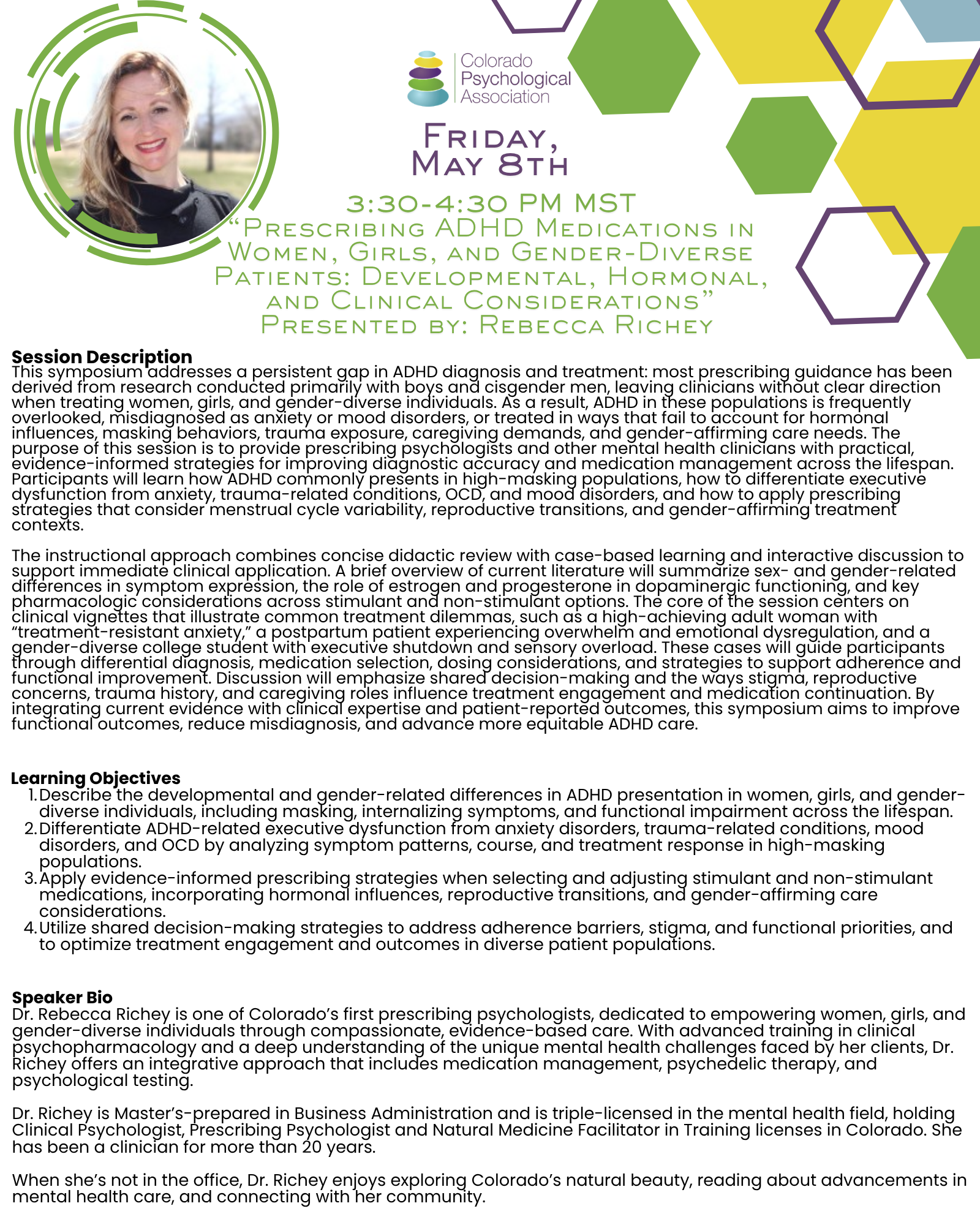
Speaker: Dr. Rebecca Richey
Presentation Description:
Obsessive-Compulsive Disorder (OCD) is often underrecognized or misdiagnosed, especially in populations where symptoms present in less stereotypical ways. This symposium will provide generalist psychologists with practical tools to enhance diagnostic accuracy and treatment planning for individuals with OCD. As a prescribing psychologist, I will guide attendees through a comprehensive assessment approach that integrates differential diagnosis, trauma-informed care, and developmental considerations. The second half will focus on the fundamentals of psychopharmacological treatment for OCD, with emphasis on how psychologists can collaborate effectively with prescribers—or, where legally permitted, confidently manage medications themselves. Case examples and decision-making frameworks will be included to ground discussion in real-world application.
Learning Objectives:
- Identify and differentiate core symptoms of OCD across age groups and clinical presentations.
- Conduct comprehensive assessments that account for trauma, neurodivergence, and co-occurring conditions.
- Understand the evidence base for first-line pharmacologic treatments for OCD.
- Collaborate effectively with prescribers to support clients receiving medication for OCD.
- For prescribing psychologists: Apply foundational medication management principles for OCD treatment.
About Rebecca:
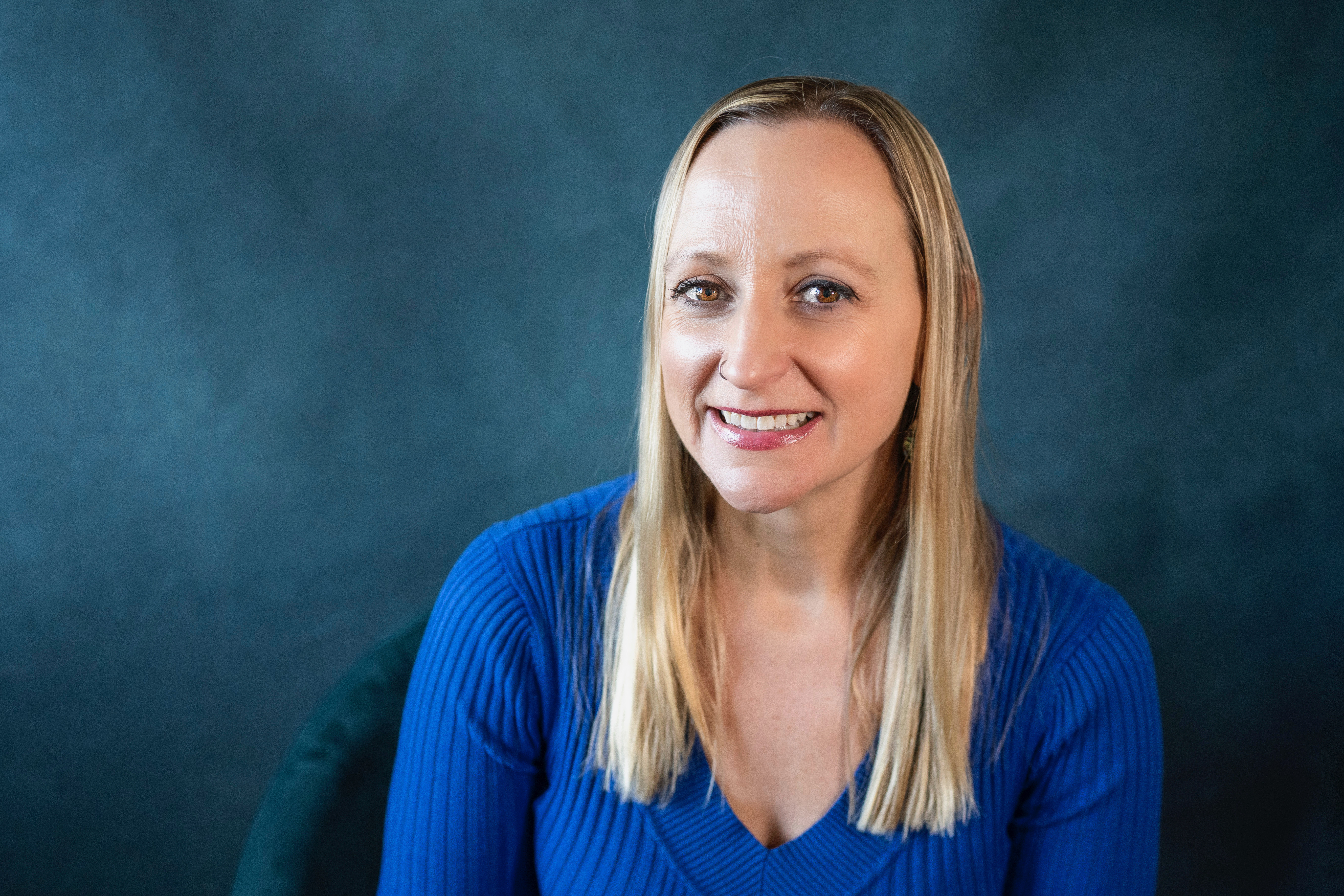
Dr. Rebecca Richey, PsyD, MSCP, is one of Colorado’s first prescribing psychologists. Her clinical work focuses on neurodivergent women, girls, and gender-diverse individuals. She provides comprehensive psychological assessments and medication management, with specialized training in trauma and OCD. Dr. Richey is committed to advancing the role of psychologists in integrated care models and to destigmatizing mental health treatment through education and advocacy. |
|
When Therapy Isn’t an Option: Applying SPACE for Treatment-Resistant Child Anxiety and
Speaker: Dr. Alex Littleton, PsyD, MA
Presentation Description:
This program introduces clinical psychologists to Supportive Parenting for Anxious Childhood Emotions (SPACE), an evidence-based, parent-focused intervention for child anxiety and OCD. Unlike traditional CBT, SPACE requires no direct child participation, making it particularly effective when children resist or disengage from therapy. Participants will explore the clinical rationale for SPACE, including how it targets family accommodation to reduce anxiety maintenance cycles. The session will review the core treatment framework, demonstrate practical interventions such as identifying accommodations and coaching parents in supportive communication, and walk through the step-by-step implementation of the SPACE protocol in clinical settings. Case examples and role-play exercises will highlight real-world application and troubleshooting strategies. The program concludes with an interactive discussion on integrating SPACE into practice, adapting it for complex presentations, and combining it with other evidence-based treatments.
Learning Objectives:
- Describe the theoretical foundations and evidence base of SPACE and explain how this intervention addresses treatment gaps for children who resist or disengage from traditional therapy.
- Identify and assess family accommodation behaviors that contribute to the maintenance of child anxiety and OCD, using validated assessment tools and clinical interviewing techniques.
- Demonstrate skills in coaching parents to deliver supportive statements that both validate their child’s distress and promote independent coping, and apply these skills in varied clinical scenarios.
- Outline the key components of the SPACE treatment protocol and describe how these elements can be introduced and discussed with parents in a clinical setting
- Integrate SPACE strategies into professional clinical work by evaluating when SPACE-informed approaches are indicated, adapting for diverse presenting concerns, and combining with other evidence-based treatments as appropriate.
About Alex:
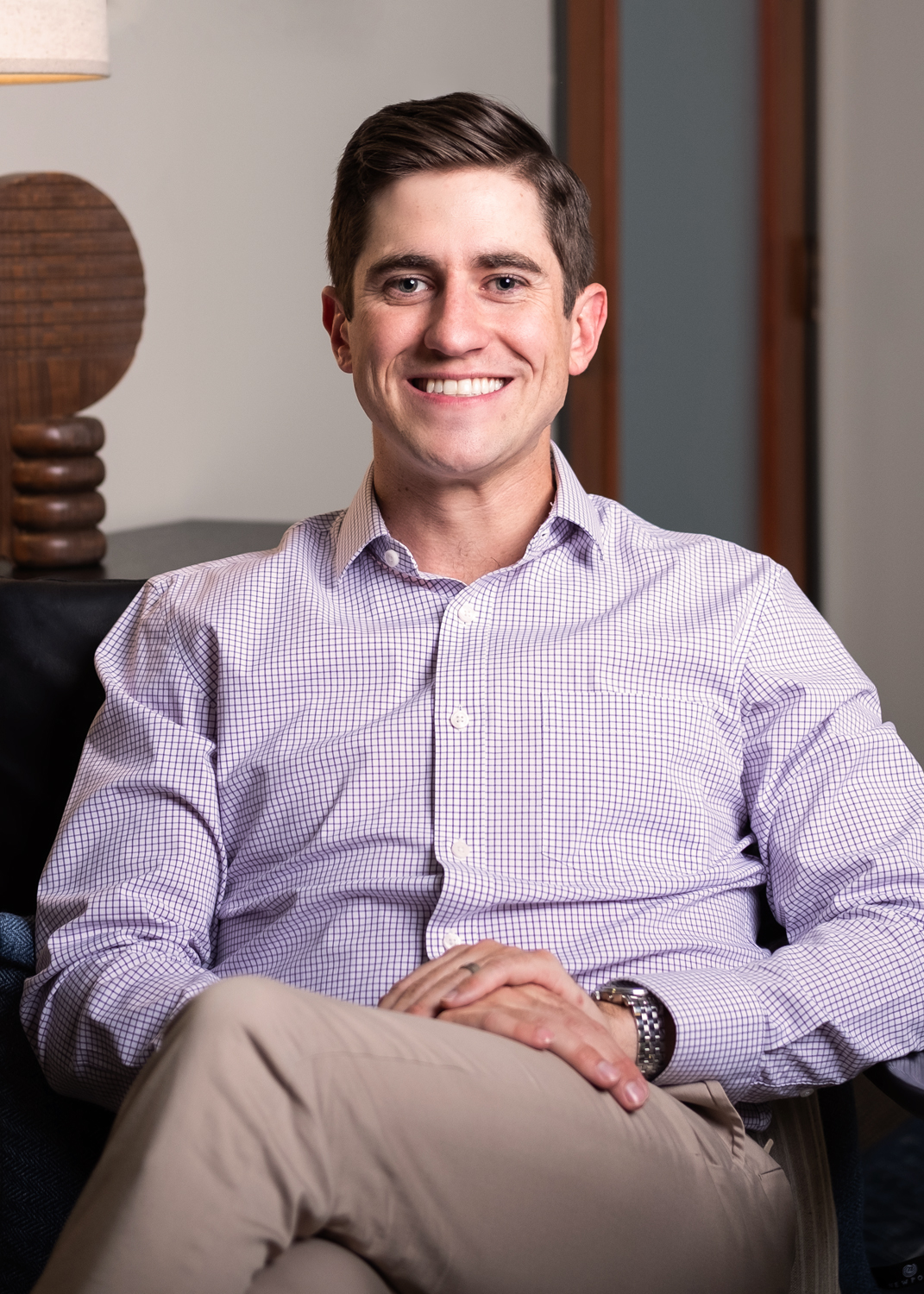
Dr. Alex Littleton is a licensed clinical psychologist and founder of Vivid Psychology Group, where he and his team specialize in treating anxiety, OCD, and related conditions. His work centers on Exposure and Response Prevention (ERP) and other evidence-based approaches, including ACT, CBT, and SPACE. Dr. Littleton has advanced expertise in Supportive Parenting for Anxious Childhood Emotions (SPACE), applying this model to child anxiety, OCD, ARFID, and Failure to Launch (FTL) to help families reduce accommodations and foster independence. He also directs a student training program within the practice, expanding access to high-quality care for underserved populations, including Medicaid recipients. Dr. Littleton provides therapy, parent interventions, and professional consultation in Denver, CO, and via telehealth across most U.S. states.
|
When Intrusions Collide: Exploring OCD, PTSD, and Diagnostic Overlap
Speakers: Rachel Kirkman, PsyD and Mitra Lebastchi, PsyD
Presentation Description:
Accurately diagnosing obsessive-compulsive disorder (OCD) remains a significant clinical challenge, particularly when symptoms resemble other conditions or overlap with posttraumatic stress disorder (PTSD). This presentation emphasizes recognizing under-identified and misdiagnosed OCD presentations through the use of clinical vignettes. Special attention will be given to the heightened likelihood of OCD–PTSD comorbidity and the importance of differential diagnosis. Attendees will leave with a clearer framework for distinguishing OCD from related disorders and will review evidence-based treatment options for cases in which both OCD and PTSD are present.
Learning Objectives:
- Identify 2 commonly misdiagnosed OCD clinical presentations
- Name 3 evidence based treatment options when both PTSD and OCD are present
- Recognize the higher likelihood for comorbidity of PTSD with OCD
About Rachel:
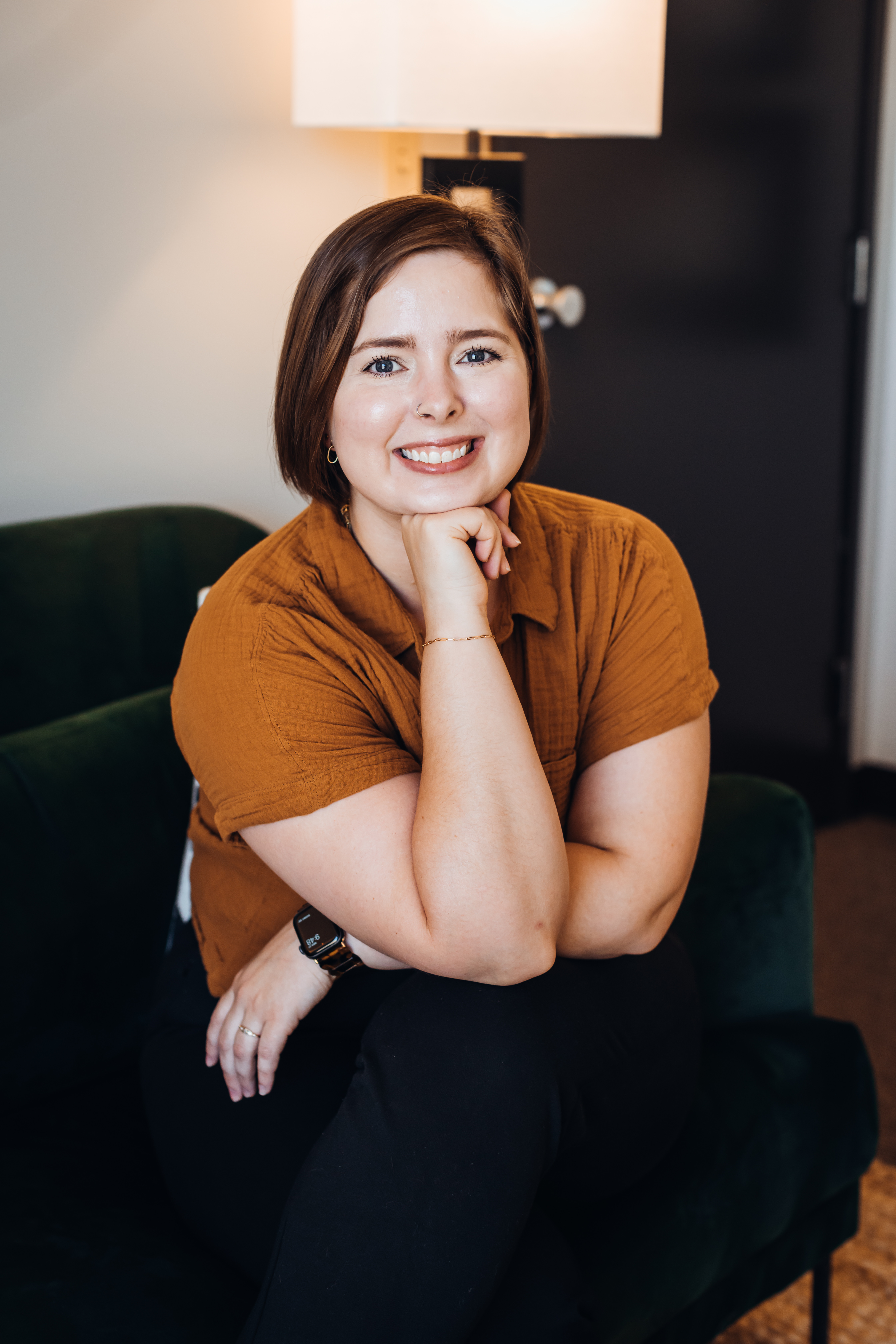
Rachel Kirkman is a Licensed Clinical Psychologist and has enjoyed meaningful therapeutic work at The Emerald Couch for the past two years. She started her schooling with a Bachelor of Arts in Psychology from Florida State University, followed by a Masters and Doctorate in Clinical Psychology from Azusa Pacific University in Southern California. She has a strong background in clinical healthcare settings working with chronic pain and the trans community. She utilizes specialized training in Exposure and Response Prevention (ERP) for OCD, Eye Movement Desensitization and Reprocessing (EMDR), Acceptance and Commitment Therapy (ACT), and Cognitive Processing Therapy (CPT) to help clients navigate obsessive compulsive disorder (OCD), trauma, and anxiety. As a mom and queer therapist, she also has a passion for working with LGBTQIA+ and perinatal client populations.
About Mitra:
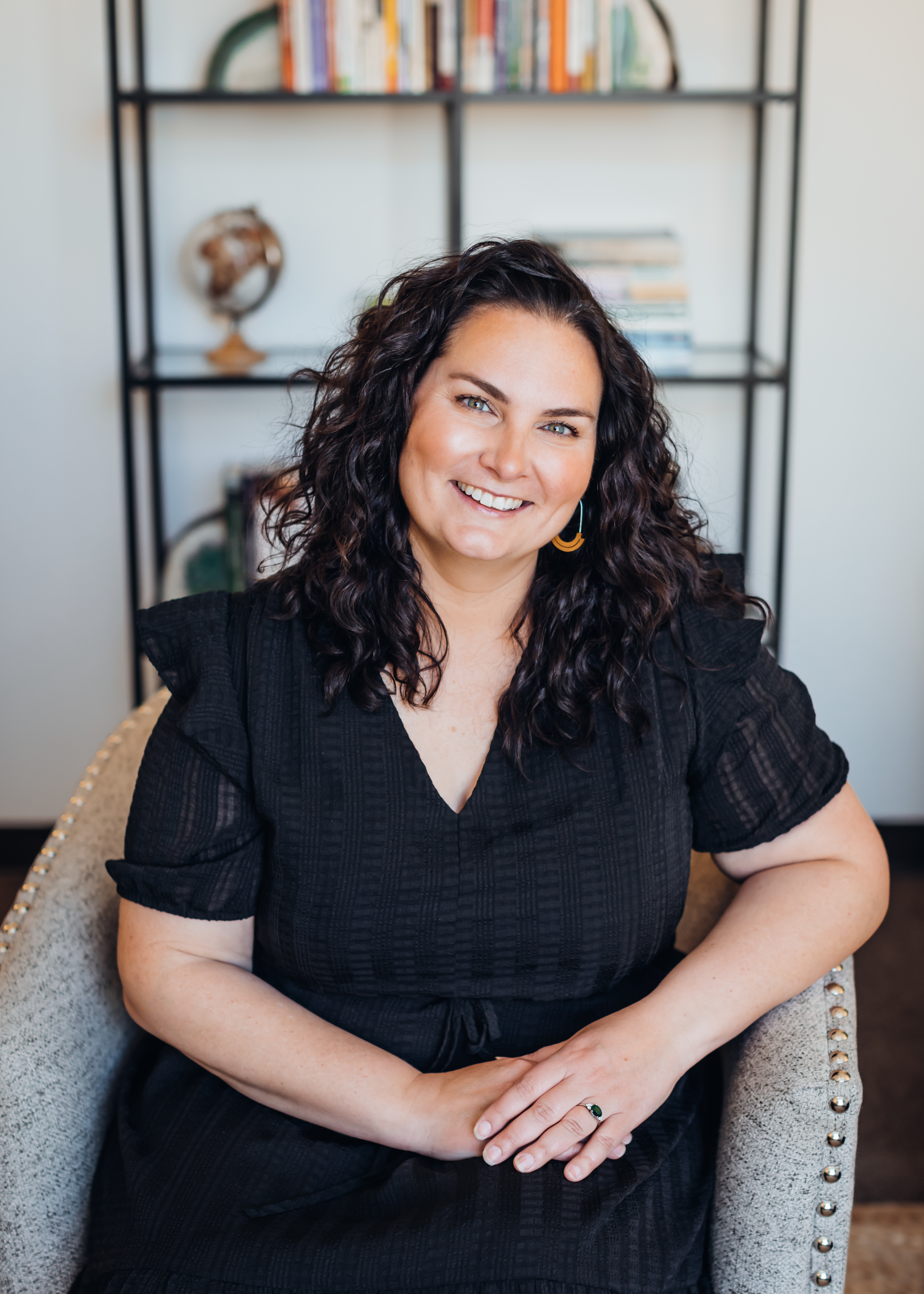
Mitra Lebastchi is a Licensed Clinical Psychologist and the owner of The Emerald Couch, a private practice in Denver, CO. She earned her Bachelor of Arts in Psychology from the University of California, Los Angeles, her Master’s degree in Clinical Psychology from Pepperdine University, and her Doctorate in Clinical Psychology from the University of Denver’s Graduate School of Professional Psychology. She has extensive experience working with perinatal populations, Veterans, and LGBTQIA+ community members. Dr. Lebastchi draws on specialized training in Eye Movement Desensitization and Reprocessing (EMDR), Cognitive Processing Therapy (CPT), Prolonged Exposure (PE), and Exposure and Response Prevention (ERP) to treat trauma- and anxiety-related disorders such as PTSD and OCD. As an Iranian-American mother, she deeply values practicing culturally sensitive psychotherapy.
|
|